What do I need to do to get to Heaven? Believe? Obey?

This is a follow up to “Heaven or Hell?” Most Christians will say all we need to do is believe in Jesus, so a bunch of people who don’t understand what “believe” means feel a false sense of relief, erroneously thinking: I can live however I want, because I believe, I have God’s grace and I will go to Heaven. (WRONG!)

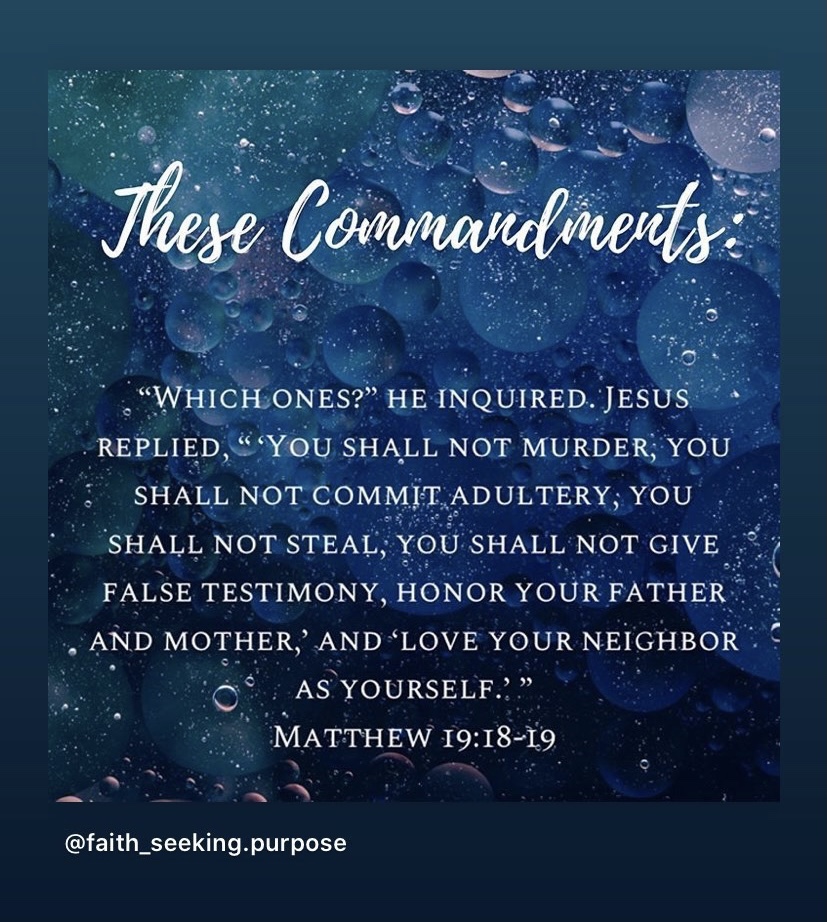
But what did Jesus say? Jesus didn’t say all we have to do is believe! He said:

Believe what you want to believe, it’s your choice how your live your life, but for me, I don’t want to find out when it’s too late: I’m focusing on keeping The Commandments. So what are the commandments and where are they in the Bible? Exodus 20 (linked to Bible)

The 10 Commandments:

  1. Acknowledge there is only ONE God: God is not “whatever/whomever” modern society/culture tells us is okay to believe, all “gods” are not all the same, people do believe in different Gods. God has a personality, God is a spiritual being, God has emotions, God is living, God is our Creator, God is love, God created love, God will not be mocked, God is just, God is powerful. (bible link)
  2. Love God above all. If you want to “test” your adherence to this one, fill in the blank with what comes to mind: Who or what is most important in your life? _______ Be honest answering this question, only you will know your honest answer. If you answered anything other than God, you have a potential “idol” in your life, you are potentially worshiping something other than God and you may not even realize it! There is something else that many may not realize is breaking this commandment: if a person prays to a “saint” that person is breaking this commandment. We are supposed to go to God with everything, why would a person pray to someone less than God? Wouldn’t it make more sense to pray to the most powerful, most capable directly? It really doesn’t make sense, but it is taught in a Christian faith. There are parts of the Bible when a person falls down on their face in front of an angel who visited, and the angel often tells them: basically don’t worship me, I’m just a messenger. Other biblical people did great great things, had incredible roles given to them by God, as there are some people today doing the same, they were (or are) God’s messengers, but they were (or are) human, not God. They deserve respect, but NOT our prayers addressed to them. (bible link)
  3. Only say God’s name with respect when referring to Him. Yes, when a person cusses saying “God…” that is breaking this command. (bible link)
  4. Every week, devote a day to resting and connecting with God. If we don’t, we are breaking this commandment. As I understand, originally the Sabbath day was what we refer to as Saturday, but some religions changed it to Sunday, for what reason, I’m not sure, but this is one of those “technicalities” that may not be worth debating? It’s probably more important to identify: What’s the main point of this command: resting and making it holy (connecting with God). Get your work done the other six days, but on the 7th day, take a break, connect with God. (bible link)
  5. Realize that our natural parents were used by God for us to be here and God wants us to honor our parents. Some people have wonderful loving parents and some people don’t, but that isn’t what matters. They are human, and not perfect, just like us, so they deserve “honor” for bringing us into this world and this was important enough to God to issue a command to us regarding this. (bible link)
  6. Do not murder/kill anyone. For those who happily say: I don’t have to worry that I’ve not broken that one! Jesus put a heavier meaning on it and we all break this commandment! Jesus tells us “anger” is included in this command! Read Matthew 5: 21-25 (here) and more about fighting, paybacks, enemies Read Matthew 5: 38-48 (here) and the (bible link) to the command.
  7. Do not commit adultery. But Jesus puts a heavier meaning on this command also: looking at someone lustfully, Jesus also addresses divorce, remarriage and oaths. Read Matthew 5: 27-37 (here)
  8. Do not steal. It’s worthwhile to read the definition of “steal” because it happens a lot today in business, politics, and among people in general. (bible link)
  9. Do not lie (deceive others or make an untrue statement). (bible link)
  10. Do not desire something that belongs to someone else, whether the desire is for a material thing or a person. (bible link)

It’s interesting in the Bible when the Commandments were given to Moses by God to share with people, the people were in fear of God, but what Moses said is interesting:

20 Moses said to the people, “Do not be afraid. God has come to test you, so that the fear of God will be with you to keep you from sinning.”

Fear was used by God to TEST people and keep people FROM SINNING. When Jesus talked with his disciples, he also elaborated about the commands:

We need God to make the impossible happen: Jesus made it possible for us (he was the final sacrifice). We need Jesus to get to Heaven, we couldn’t do it by being good, because we fail at that. We need the Holy Spirit’s help living our lives: wisdom, guidance, self-control, etc. Obedience to God’s commands does matter because it shows our love to God; deliberate dis-obedience shows disregard for God and what He’s asked of us; it doesn’t show love to God. So if we honestly BELIEVE this, then we will try our best to live the way God wants us to live, out of thankfulness and respect for God because of what Jesus did for us. If we mess up along the way (and we will, Jesus acknowledged that), God is the most forgiving of all, but He also won’t be mocked, and don’t forget He is omnipresent (nothing is hidden from Him) and He is just, so it does matter how we live. It is important to remember that some of the most well known figures in the Bible broke commandments: Moses killed someone out of anger, David committed adultery and killed Bathsheeba’s husband, Paul (Saul) had persecuted and killed Christians prior to his conversion but he ended up writing much of the New Testament. However, the one thing in common all these people had was love and respect towards God and Jesus’ death and resurrection was the price paid for sin. This further supports Jesus’ statement that the 2 greatest commandments are: #1 Love God and #2 Love Others.

God acknowledged Jesus when Jesus was baptized:

People in the Old Testament also acknowledged Jesus, these are just a few examples, because I’m still studying the books written by the Prophets:

Isaiah (740 BC to 681 BC): Jesus’ birth and second coming referenced (here) and (here) and (here) and (here) and (here) and (here) and (here) and (here) and so many more places that I haven’t underlined in my study bible yet.

Jeremiah (626 BC to 585 BC): Jesus (here)

Ezekiel (593 BC to 571 BC) Jesus (here)

Daniel (536 BC to 530 BC) Jesus (here)

Joel (c. 609 BC) Jesus second coming (here)

In summary, from what I’ve read, it doesn’t seem like we can ignore The Commandments and anticipate Heaven. God knows our intentions and we will be judged after we die, or if we are alive, after Jesus returns.

Jesus said we have to be “born again” to enter God’s kingdom. “Born of the Spirit” (read this)

Regarding Jesus’ return: this is something else that wasn’t focused on very much in the “religion” classes I had growing up. But it’s very interesting reading what most of the Prophets in the Bible foretold will happen prior to and when Jesus returns. That event remains in the future for all of us, as of now. I may write about that next? As I was speed reading those books looking for the references to Jesus, I was amazed how connected each Prophet’s book is regarding the future and how similar the Old Testament is to the New Testament’s Book of Revelation and also what Jesus told his followers about his return. Things that can’t be ignored.

Should We Trust our Feelings?

Should we trust our feelings? My guess is anyone reading that question will have a number of reactions, such as: “YES!!!!“or “NOOO!!!!” or “I have no idea; I’m confused, help!” So what is the Truth? How do we know which answer is the correct one? These answers are provided below.

  1. Should we always trust our feelings? The Truth is NO.

2. Are there times we should trust our feelings? YES. Then, when? See below.

3. What if we are confused? How can we determine the correct answer? See below.

When Trusting your Feelings is Wrong:

Let’s be honest. Since the day we were born, we started out selfish, self-centered, right? All of us were born that way. If and when we grow and mature (emotionally, not in years), we become less self centered/selfish, but it takes intention and effort to grow and mature, it doesn’t come naturally, just like growth in anything else (such as working out, eating healthy, growing a business, relationships) : no pain, no gain.”

So a simple question to ask ourselves is: Is my feeling motivated by self-centeredness, selfishness? If the answer to this is “yes” then trusting your feelings is wrong. Spend time being honest with yourself about the answer to this question. Don’t lie to yourself, be honest.

When Trusting your Feelings is Right:

With the same question above, we can know if trusting our feelings is right. Is my feeling motivated by selflessness, driven by loving , contributing to or helping others? If the answer to this is “yes” then trusting your feelings is right.

What if the motivation behind the feeling is selfless, driven by love, contribution or helping others but FEAR is holding me back? Fear can a blocker to something good or it can be something that protects us. If the reason behind the fear has to do with a life or death situation then trust your fear! But if not, do not let fear guide you, it is BLOCKING YOU from growth. Say you are motivated for the right reasons and you don’t submit to fear, you proceed, then something doesn’t work out as you planned? That was still the right thing to do because it is growth. We grow when we go through tough times, we come out better! As many say: if we’re not growing, we’re dying! We can’t be doing neither, think about it. Don’t let the wrong kind of fear hold you back.

When your Feelings are Confusing you:

This is the hardest one! Confusion is telling us to: WAIT, HAVE PATIENCE, but most of all PRAY! If the answer isn’t clear after reading the above testing question to know if trusting our feelings is wrong or right, then our situation is more complicated (based on the bible, confusion occurs when unrepentant sin in involved) and we need may need forgiveness and guidance from God. Waiting does not mean do nothing, it means slow down, pause, be patient but take action in prayer right away. Talk to God about it from the deepest most honest, vulnerable part of ourselves. This is between you/me and God alone, no one else. God will give us clarity eventually. But don’t “do nothing” during this time of “waiting and patience” pray about it often until clarity is received, not “a feeling,” but unquestionable clarity. Confusion is due to sin, according to the Bible. So where do we get this clarity? From God’s word, the bible. This is the coolest, most awesome thing to discover! It seriously has all the answers to the complicated questions and it is the truth.

I wasn’t taught to go to the bible for answers to questions until recently. I didn’t use it as a resource (ever) quite honestly, but once I discovered this, I am so thankful because it answers so many questions. Today, there is no excuse for not having this resource, if you have access to the internet. Some of the bible is hard to understand the first time reading. To truly know the meaning behind a quote you see, you need to read it in context so you get the full understanding. Even when you do that for the first time, there may be questions. This is where other people can help. Not necessarily by giving their interpretation of the bible, but by directing us to other passages that answer our questions. Be VERY cautious of people who interpret the Bible, don’t take their word, but ask questions, pray about it, then you will know. There are many people today who give their opinions, don’t trust “opinions” only trust facts. Facts are found by reading the bible and through prayer. Many people are misguided but can be convincing so they will give us the wrong information and lead us down a path of destruction. Sometimes people truly have good intentions, but are still not correct. Look for answers in the bible and through prayer.

I hope considering these simple questions helps. I’ve added resources and references next:

RESOURCES

A few different FREE online bible resources (check them out to see what you like best):

Selfishness “Wisdom” from the Bible:

THE “RIGHT” FEELINGS TO FOLLOW ARE MOTIVATED BY SELFLESSNESS AND LOVE- FROM THE BIBLE:

FEAR ADDRESSED IN THE BIBLE:

HOW TO DEAL WITH CONFUSION AND TIMES OF CONFUSION (CAUSED BY SIN) – FROM THE BIBLE:

FIRST SEEK GOD – FROM THE BIBLE:

God and Relationships: Healing, Forgiveness and Love

Last night before I went to sleep, when I prayed, I asked God if He would inspire me with something meaningful to share because I haven’t written in this blog since June, I wanted to write, but I haven’t felt inspired for awhile. Well, God answered that prayer at 6 am this morning when the title of this was the first thought I had as soon as I woke up.

It amazes me how the Bible shares wisdom with us “scattered” throughout the book, through different messengers, but all giving the same message.

This topic is consistently timely because we interact with people on a daily basis and need God’s help “dealing with” people, and more appropriately “dealing with” ourselves. I’ll explain the image for this article and how it relates:

We need God in our relationships: any relationship with God as a part of it equals love.

God is love.

MAKING EXCUSES

I believe in being accountable for my own actions, not making excuses (understanding what leads me to something, but not blaming my actions on someone or something else). I’m responsible for my own actions no matter what happens around me. I personally choose to react the way I do. So why is it that I allow different standards for others? I allow excuses for them. Excuses justifying other’s actions or behavior, when I wouldn’t allow myself to act that way. I made excuses because I thought trying to be a Christian meant accepting other people as they are, and not being judgmental of others, which it does, but there is more to this:

A Christian should help others be aware of the wisdom from God through the bible (awareness only -not judgement nor retaliation- that’s reserved for God) – don’t be silent, speak up, but don’t do this in anger, do this in a loving way to build up the other person, in the knowledge of God, not tear them down.

DO NOT JUDGE:

GO TO THE BIBLE AND IN PRAYER GO TO GOD FOR ADVICE, STRENGTH AND WISDOM:

HEALING

I had to think: which comes first: healing or forgiveness? It’s a challenge to forgive someone if we haven’t healed from what happened. But we also can’t heal from it unless we forgive it (let it go). So maybe it’s a combination of healing and forgiveness, but first and most importantly seeking God. This is where we NEED God: to heal and to forgive. There is no question about that. I often think of this simple statement which is so true:
Hurt people hurt people.

Pastor Rick Warren

It’s something I keep in mind whenever someone hurts me. It’s important to have that perspective, it makes it easier to accept someone for who they are. We can’t know everything that happened to someone during their life. If someone was loved throughout their life, they wouldn’t hurt. So because they have been hurt (and haven’t healed), they hurt other people. So it’s so important for all of us to heal from the hurt other people caused in our lives.

FORGIVING

If we want a great relationship with anyone, we need to be able to forgive, regularly! Forgiving someone doesn’t mean allowing what they did to continue as if it doesn’t affect us. But if the other person who hurt us is truly sorry, that person will do their best to not do it again and ask for a second chance. If the person truly wants forgiveness and tells us how they have changed and why they have changed, then we need to offer forgiveness. (If this is an abusive situation, we may need to offer forgiveness but not remain in that person’s life for safety reasons. This type of situation requires other qualified individuals’ assessment of the situation.)

WHY WE NEED GOD FOR HEALING, FORGIVENESS AND LOVE (and Eternity):

HOW WE GET THE POWER OF THE HOLY SPIRIT

On our own, we are going to fail, that’s the truth, but if we have the Holy Spirit in us, we will succeed. So how do we receive the Holy Spirit? God sends the Holy Spirit to us if we ask and OBEY God:

And this is why we need God in all of our relationships. We need a relationship with God so that we can have good relationships with other people through the strength of the Holy Spirit in us.

Once we have a relationship with God, he will protect us until the end of times.

HERE’S HOW YOU CAN TELL IF SOMEONE HAS A RELATIONSHIP WITH GOD (these qualities will be evident in that person’s life):

We obviously need God as the priority in our life, so the rest of our life can fall in place. As in any good relationship, there is an exchange of giving and receiving. This is no different with God, we aren’t going to receive the power of the Holy Spirit unless we obey God’s commands (sin keeps the power of the Holy Spirit from us). God always loves us, but the power of the Spirit is reserved for those who obey Him. The power of the Holy Spirit makes our lives more peaceful, provides joy, wisdom and enables us to love in a more godly way than we could on our own.

I hope you found this helpful for your relationships!

Am I a “Fake Christian”?

In some parts of the world, being a Christian is acceptable and has a positive connotation; but in other parts of the world, being a Christian is not acceptable and people are persecuted for it. Thankfully, in the US, we currently have freedom of speech and don’t fear referring to ourselves as a Christian. However, being a Christian in today’s modern world has lost its some of its meaning; many think, if I say I believe in Jesus, I’m saved. (But don’t forget, even the demons in the bible believed in God, and you probably know they won’t be in eternal life with God.) Therefore making it to Heaven by believing in Jesus, including his death, resurrection and ascension (faith) is part of the truth, but not the whole truth.

Throughout this article, links to verses from the bible are provided, supporting the statements made.

Many may not know, or never paid attention to the next part: faith without action is dead, or they never heard Jesus’ talk about the wide gate and the narrow gate. I was one of those people who thought believing in Jesus and being a “good” person was enough. But being “good” is not enough, and no person is “good”, only God is “good” – Jesus said that. We can’t get to Heaven just by being “good” because we would never be that good to be in God’s presence. Jesus was the sacrifice, God’s gift to us that makes this possible, but throughout the Bible, we are told to be obedient and change our ways. I didn’t fully comprehend what this meant for many years, so it made me think: maybe there are more people like me who are not fully aware of this either?

The word “Christian” is used very casually today, many of us calling ourselves Christians/Believers, but not acting like Christians/Believers (aka “Fake Christians”). “Fake Christians” give practicing Christians a bad reputation to those who don’t believe anything or follow a different religion. I say practicing Christians because let’s face it, no one is or will ever be the perfect Christian and that is why God sent Jesus as THE sacrifice for all of us who call ourselves Christians. I write this for an awareness most importantly because knowing this affects our eternal life/salvation promised by God. Knowing if we will make it has been so diluted by so many religious authority figures, in an effort to become “politically correct,” it concerns me, especially when it comes to the question: “Will I make it to God’s promised eternal life?” this subject becomes important for every single one of us on earth.

So what is a true Christian, a true believer? A follower of Christ. What does it mean to be a follower of Christ, a believer? If we believe what Jesus taught when He was here then he told us what we need to do. He didn’t just say “believe,” in His first teachings He told people to “repent.” So being a “believer/Christian” means doing a lot of things, such as:

So after reading this above, it’s probably pretty easy to see that being a Christian isn’t easy or effortless. But it’s also important to not become discouraged, to know that no one will be perfect; it’s the true intention we have that matters to God. That’s why regular prayers and connecting with God is important. And correcting our mistakes as soon as we realize we made one.

Studying the bible showed me I had a lot of work to do. It’s much easier to say we are all saved by grace and we don’t have to do anything else…but I don’t believe that is the full Truth: we have a choice, an obligation, and a commitment to make.

We have to have a relationship with God, if we don’t we may hear Jesus say to us: “I never knew you.” The other important part to know is that only one sin is unforgivable: blasphemy of the Holy Spirit, but no other sin is too bad for God to forgive. He willingly forgives and encourages us to do the same with each other, when someone asks for our forgiveness. It’s never too late and it’s what God wants: a relationship with us in eternity.

What Marriage should be…

It’s interesting how one idea leads to another when there are no other distractions! Yesterday I wrote “Marriage doesn’t exist in God’s Kingdom” and after I finished, I thought more should be said about marriage because it truly is something very important, it is a union envisioned and created by God, but in our culture, marriage is viewed as “disposable.”

Why should I write about this?

Because many people, even strangers surprisingly, have asked for advice and I’m not even a psychologist! I think back to when I was a teen, after my parents’ divorce, I was on my own quest for relationship advice, I didn’t know where to get it, so I kept reading books. But even in books there is a lot of bad advice out there, as I’ve finally learned, but now know the truth. So who can be trusted? There’s only one trusted source: God. So what follows is NOT MY advice; this is from the Bible, summarized here:

What marriage should be:

  1. Two people honestly focused on God as the priority

This point is the most important part of a marriage, and the emphasis is on “two,” both people, not just one person. If you both aren’t focused on God as a priority there is a very high probability that you will go through a divorce. If you’re not married yet, you should hold off and save yourself the headache, if both of you are not God focused; that should happen first. So if you choose to get married without taking this step first, then plan on giving away whatever you accumulated and be prepared to live a more simple life than you are right now because that is reality.

So how does having God as a priority make a marriage successful?

Marriage is hard work. Each person will need help with marriage because no one is perfect and we truly can’t do it on our own; we will need God’s strength at some point to continue, or to change. Because honestly some situations are just too challenging to deal with on our own. Trust in God.

If a couple is God focused, they commit to obeying the 10 commandments. These are the laws from God that should not be broken.

If both people are focused on God and follow the ways Jesus instructed, then each person will NOT be focused on:

  • sexual immorality
  • impurity
  • lust
  • evil desires
  • greed
  • anger, rage
  • malice
  • slander
  • filthy language
  • lies
  • getting drunk

But they WILL be focused on:

  • compassion
  • kindness
  • humility
  • gentleness
  • patience
  • forgiveness
  • love
  • peace
  • thankfulness, gratitude

2. Two people should know what “LOVE” truly means and be prepared to make that commitment to each other

I wrote about this in detail recently: “Real Love”

3. The husband should desire to do/be the following in marriage:

4. The wife should desire to do/be the following in marriage:

I truly believe that if people followed these guidelines from the Bible, there would no longer be divorce. All the underlined text above has links from the bible for reference. I hope this is helpful to someone who reads.

Marriage doesn’t exist in God’s Kingdom

After week number one at home, for the “stay home order” in most of our communities, some people may read this and feel relief (just kidding) and others may get anxiety.

As I was reading the bible for the first time (late summer/fall 2019), I read this statement Jesus made when talking about resurrection, a detail I never heard before or thought about but when I read it, I had more questions, the statement is:

“Marriage is for people here on earth. But in the age to come, those worthy of being raised from the dead will neither marry nor be given in marriage.”

Luke 20:34-35 (NLT)

The questions that came to mind after reading that were:

  1. Why does marriage exist (from a biblical perspective)? What is the purpose of marriage?
  2. Why is so much emphasis placed on marriage in the Bible?
  3. If marriage is important enough to address in the Bible, then why is it not part of eternity?

I thought about writing on this subject months ago, but then changed my mind, staying away from it because of potential controversy. But when this scripture came up again (I am currently, daily, reading parts of the bible covering teachings from Jesus), and today I woke up at 2 am and this was the next one I would read. I decided maybe I should write about it? Maybe the timing is right?

Why does marriage exist (from a biblical perspective)? What is the purpose of marriage?

Biblical Answer: God created this union (what we call marriage) and the purpose was for man not be alone, to have a helper, to have children and to take care of the earth. (supporting bible verses below)

First of all, when researching this, my goal is avoiding what I’ve “learned” anywhere and only looking in the bible; not adding personal beliefs.

With that in mind, what is the definition of “marriage” from the Bible?

  • Genesis 1:27 – 28 NLT: “So God created human beings in his own image. In the image of God he created them; male and female he created them. Then God blessed them and said ‘Be fruitful and multiply. Fill the earth and govern it. Reign over the fish in the sea, the birds in the sky, and all the animals that scurry along the ground.”
  • Genesis 2:7 NLT: “Then the Lord God formed the man from the dust of the ground. He breathed the breath of life into the main’s nostrils, and the main became a living person.”
  • Genesis 2:15 NLT: “The Lord God placed the man in the Garden of Eden to tend and watch over it.”
  • Genesis 2:18 NLT: “Then the Lord God said, “It is not good for the man to be alone. I will make a helper who is just right for him.”
  • Genesis 2:24 NLT version, there isn’t a marriage ceremony, but it states: “This explains why a man leaves his father and mother and is joined to his wife, and the two are united into one.” And after this is the first reference in the bible to “wife” and “husband.” In Genesis 3:20 NLT, the names Adam and Eve were mentioned.

What is the definition of marriage from the dictionary? Dictionary.com: “Any of the diverse forms of interpersonal union established in various parts of the world to form a familial bond that is recognized legally, religiously, or socially, granting the participating partners mutual conjugal rights and responsibilities and including, for example, opposite-sex marriage, same-sex marriage, plural marriage and arranged marriage.” (Very much of an expanded definition, but not biblically based regarding what marriage is)

Why is so much emphasis placed on marriage in the Bible?

Biblical Answer: Because marriage affects a person’s relationship with God either in a positive way or a negative way. (supporting verses from the Bible below)

Until Jesus began teaching about God, what everyone knew about God was from the Old Testament (by historically documented events, God’s chosen people and prophets – who told of things that actually happened later). In the Old Testament, through God’s chosen people, we first learn about how marriage affects a person’s relationship with God in Genesis 3: 1-19 when sin entered and hurt the relationship between God and humans so God punished them both for their sin of disobedience to God.

Throughout much of the Old Testament in the Bible, there is a reference to a “wife” but there are also servants, concubines, etc. who also had children with some of God’s chosen people. One of the first examples: Abraham’s wife was Sarah, but he also had a child (Ishmael) with Hagar (a servant, as suggested by Sarah and with permission from Sarah because Sarah was unable to have children, but in very later years God promised Sarah a son then she had Isaac). This situation caused ongoing continual problems between Sarah and Hagar, but God ended up blessing both of their sons and the bible doesn’t record anything about a punishment for anyone of them, but it does comment on Abraham’s strong relationship with God. Abraham was a prophet of God (Genesis 20:7) This is an example where God doesn’t appear to punish, or at least it wasn’t recorded. Abraham married again after Sarah died and had more children. Isaac’s son Esau had two wives and his other son Jacob had two wives also. These multiple marriages also caused numerous problems, but not directly with God.

However during the same time, God destroyed Sodom and Gomorrah because of wickedness, sin and immorality because the people were turning away from God. (So why are these treated differently?) The destruction of the cites of Sodom and Gomorrah occurred before the 10 Commandments were given to Moses (c. 1445 BC).

Regarding the commandments: the first four commandments are essentially about people making God the priority above all else. The next six commandments are essentially about how people should treat each other. In the New Testament, when Jesus was asked: “What is the most important commandment?” he stated this: first is to love God and second but equally important love each other.

King David, Jesus’ ancestor, whom God was pleased with most of the time, broke at least a couple of the commandments when he committed adultery with Bathsheba and had her husband killed in war. God did punish them when the first child they had died. But they had another child who later became King Solomon and God was initially pleased with him too. King Solomon was known as the wisest and built a temple for God. But even the wisest, King Solomon, was turned away from God by marrying pagan women and having multiple wives. There are numerous examples in the Old Testament where intermarriage between tribes turned good people from God destroying the relationship with God.

Also in the Book of Ezra, the Israelites made a covenant with God to divorce their pagan wives. And in the book of Nehemiah, he also made them promise they would not intermarry with pagan people.

So all of these examples show how joining with someone God doesn’t bless harms the relationship with God.

So the last question I had:

If marriage is important enough to address in the Bible, then why is it not part of eternity?

My personal conclusion based on information from the bible for this answer: It seems clear to me that God wants our attention, He wants to be the priority and focus of our lives, and rightfully so, because He created us. So who we marry matters to God because the spouse will either build our relationship with God or destroy our relationship with God. The relationship with God is what matters most to Him. Wedding vows often include “til death do us part” and this makes even more sense to me now, because there isn’t marriage in God’s Kingdom (life after death) based on what Jesus said.

Also, it seems that Jesus used the concept of marriage so people would better understand the relationship Jesus has with the church based on something familiar to them (marriage). Jesus often referenced weddings.

In the New Testament, after Jesus died on the cross and rose from the dead, Paul who was name was formerly known as Saul (the one who persecuted Christians) was called by God. He converted to Christianity and wrote much about love and marriage in the Bible. Most of what is taught about Christian love and marriage comes from Paul.

As I am finishing this, the conclusion almost makes marriage sound unimportant, while it does support what Jesus said in the Bible, I think it’s also important to reflect on the fact that God created this union in the beginning and everything God creates is good. As humans, and not “a god,” our sins can mess up what God created for good.