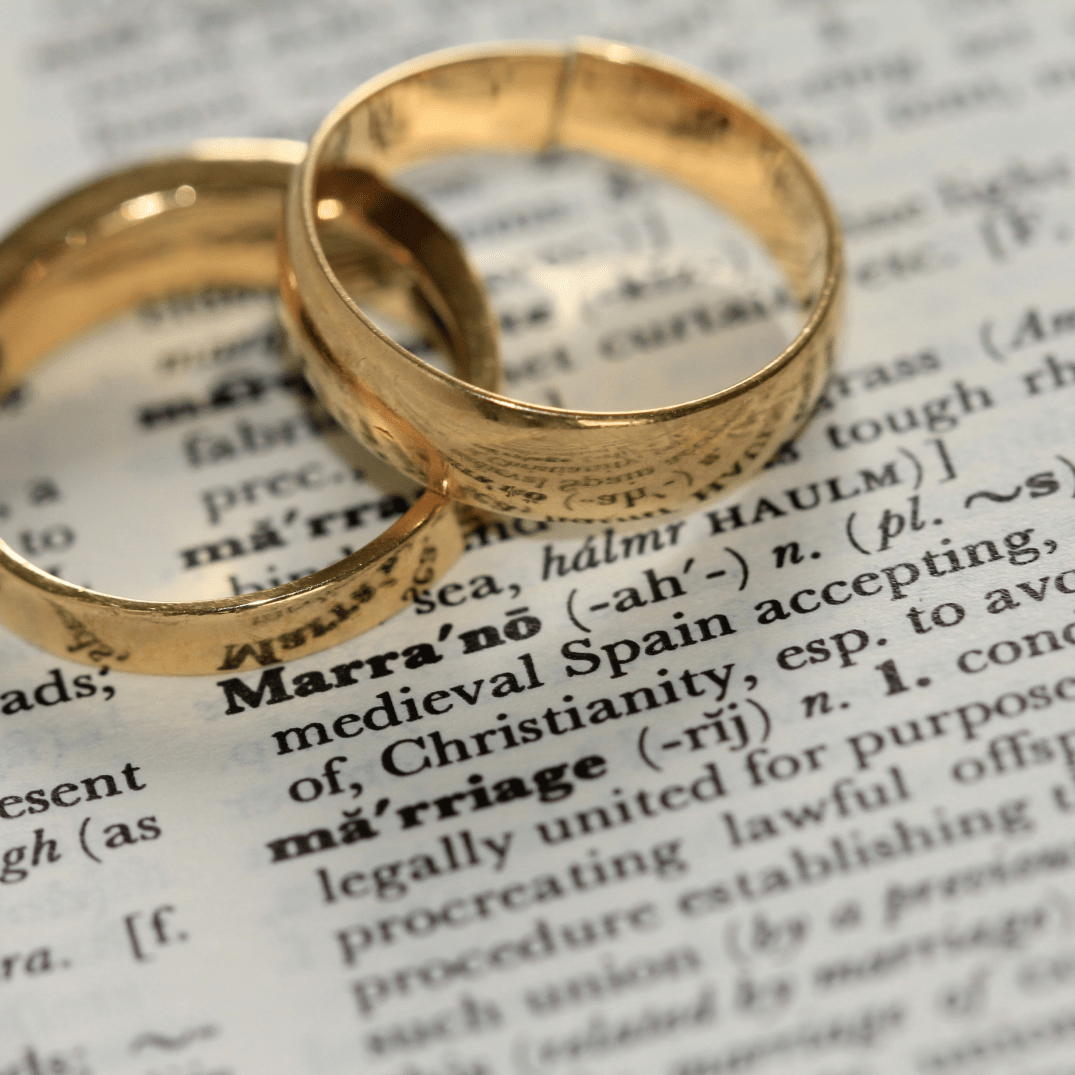
What Marriage should be…

It’s interesting how one idea leads to another when there are no other distractions! Yesterday I wrote “Marriage doesn’t exist in God’s Kingdom” and after I finished, I thought more should be said about marriage because it truly is something very important, it is a union envisioned and created by God, but in our culture, marriage is viewed as “disposable.”

Why should I write about this?

Because many people, even strangers surprisingly, have asked for advice and I’m not even a psychologist! I think back to when I was a teen, after my parents’ divorce, I was on my own quest for relationship advice, I didn’t know where to get it, so I kept reading books. But even in books there is a lot of bad advice out there, as I’ve finally learned, but now know the truth. So who can be trusted? There’s only one trusted source: God. So what follows is NOT MY advice; this is from the Bible, summarized here:

What marriage should be:

  1. Two people honestly focused on God as the priority

This point is the most important part of a marriage, and the emphasis is on “two,” both people, not just one person. If you both aren’t focused on God as a priority there is a very high probability that you will go through a divorce. If you’re not married yet, you should hold off and save yourself the headache, if both of you are not God focused; that should happen first. So if you choose to get married without taking this step first, then plan on giving away whatever you accumulated and be prepared to live a more simple life than you are right now because that is reality.

So how does having God as a priority make a marriage successful?

Marriage is hard work. Each person will need help with marriage because no one is perfect and we truly can’t do it on our own; we will need God’s strength at some point to continue, or to change. Because honestly some situations are just too challenging to deal with on our own. Trust in God.

If a couple is God focused, they commit to obeying the 10 commandments. These are the laws from God that should not be broken.

If both people are focused on God and follow the ways Jesus instructed, then each person will NOT be focused on:

  • sexual immorality
  • impurity
  • lust
  • evil desires
  • greed
  • anger, rage
  • malice
  • slander
  • filthy language
  • lies
  • getting drunk

But they WILL be focused on:

  • compassion
  • kindness
  • humility
  • gentleness
  • patience
  • forgiveness
  • love
  • peace
  • thankfulness, gratitude

2. Two people should know what “LOVE” truly means and be prepared to make that commitment to each other

I wrote about this in detail recently: “Real Love”

3. The husband should desire to do/be the following in marriage:

4. The wife should desire to do/be the following in marriage:

I truly believe that if people followed these guidelines from the Bible, there would no longer be divorce. All the underlined text above has links from the bible for reference. I hope this is helpful to someone who reads.


Marriage doesn’t exist in God’s Kingdom

After week number one at home, for the “stay home order” in most of our communities, some people may read this and feel relief (just kidding) and others may get anxiety.

As I was reading the bible for the first time (late summer/fall 2019), I read this statement Jesus made when talking about resurrection, a detail I never heard before or thought about but when I read it, I had more questions, the statement is:

“Marriage is for people here on earth. But in the age to come, those worthy of being raised from the dead will neither marry nor be given in marriage.”

Luke 20:34-35 (NLT)

The questions that came to mind after reading that were:

  1. Why does marriage exist (from a biblical perspective)? What is the purpose of marriage?
  2. Why is so much emphasis placed on marriage in the Bible?
  3. If marriage is important enough to address in the Bible, then why is it not part of eternity?

I thought about writing on this subject months ago, but then changed my mind, staying away from it because of potential controversy. But when this scripture came up again (I am currently, daily, reading parts of the bible covering teachings from Jesus), and today I woke up at 2 am and this was the next one I would read. I decided maybe I should write about it? Maybe the timing is right?

Why does marriage exist (from a biblical perspective)? What is the purpose of marriage?

Biblical Answer: God created this union (what we call marriage) and the purpose was for man not be alone, to have a helper, to have children and to take care of the earth. (supporting bible verses below)

First of all, when researching this, my goal is avoiding what I’ve “learned” anywhere and only looking in the bible; not adding personal beliefs.

With that in mind, what is the definition of “marriage” from the Bible?

  • Genesis 1:27 – 28 NLT: “So God created human beings in his own image. In the image of God he created them; male and female he created them. Then God blessed them and said ‘Be fruitful and multiply. Fill the earth and govern it. Reign over the fish in the sea, the birds in the sky, and all the animals that scurry along the ground.”
  • Genesis 2:7 NLT: “Then the Lord God formed the man from the dust of the ground. He breathed the breath of life into the main’s nostrils, and the main became a living person.”
  • Genesis 2:15 NLT: “The Lord God placed the man in the Garden of Eden to tend and watch over it.”
  • Genesis 2:18 NLT: “Then the Lord God said, “It is not good for the man to be alone. I will make a helper who is just right for him.”
  • Genesis 2:24 NLT version, there isn’t a marriage ceremony, but it states: “This explains why a man leaves his father and mother and is joined to his wife, and the two are united into one.” And after this is the first reference in the bible to “wife” and “husband.” In Genesis 3:20 NLT, the names Adam and Eve were mentioned.

What is the definition of marriage from the dictionary? Dictionary.com: “Any of the diverse forms of interpersonal union established in various parts of the world to form a familial bond that is recognized legally, religiously, or socially, granting the participating partners mutual conjugal rights and responsibilities and including, for example, opposite-sex marriage, same-sex marriage, plural marriage and arranged marriage.” (Very much of an expanded definition, but not biblically based regarding what marriage is)

Why is so much emphasis placed on marriage in the Bible?

Biblical Answer: Because marriage affects a person’s relationship with God either in a positive way or a negative way. (supporting verses from the Bible below)

Until Jesus began teaching about God, what everyone knew about God was from the Old Testament (by historically documented events, God’s chosen people and prophets – who told of things that actually happened later). In the Old Testament, through God’s chosen people, we first learn about how marriage affects a person’s relationship with God in Genesis 3: 1-19 when sin entered and hurt the relationship between God and humans so God punished them both for their sin of disobedience to God.

Throughout much of the Old Testament in the Bible, there is a reference to a “wife” but there are also servants, concubines, etc. who also had children with some of God’s chosen people. One of the first examples: Abraham’s wife was Sarah, but he also had a child (Ishmael) with Hagar (a servant, as suggested by Sarah and with permission from Sarah because Sarah was unable to have children, but in very later years God promised Sarah a son then she had Isaac). This situation caused ongoing continual problems between Sarah and Hagar, but God ended up blessing both of their sons and the bible doesn’t record anything about a punishment for anyone of them, but it does comment on Abraham’s strong relationship with God. Abraham was a prophet of God (Genesis 20:7) This is an example where God doesn’t appear to punish, or at least it wasn’t recorded. Abraham married again after Sarah died and had more children. Isaac’s son Esau had two wives and his other son Jacob had two wives also. These multiple marriages also caused numerous problems, but not directly with God.

However during the same time, God destroyed Sodom and Gomorrah because of wickedness, sin and immorality because the people were turning away from God. (So why are these treated differently?) The destruction of the cites of Sodom and Gomorrah occurred before the 10 Commandments were given to Moses (c. 1445 BC).

Regarding the commandments: the first four commandments are essentially about people making God the priority above all else. The next six commandments are essentially about how people should treat each other. In the New Testament, when Jesus was asked: “What is the most important commandment?” he stated this: first is to love God and second but equally important love each other.

King David, Jesus’ ancestor, whom God was pleased with most of the time, broke at least a couple of the commandments when he committed adultery with Bathsheba and had her husband killed in war. God did punish them when the first child they had died. But they had another child who later became King Solomon and God was initially pleased with him too. King Solomon was known as the wisest and built a temple for God. But even the wisest, King Solomon, was turned away from God by marrying pagan women and having multiple wives. There are numerous examples in the Old Testament where intermarriage between tribes turned good people from God destroying the relationship with God.

Also in the Book of Ezra, the Israelites made a covenant with God to divorce their pagan wives. And in the book of Nehemiah, he also made them promise they would not intermarry with pagan people.

So all of these examples show how joining with someone God doesn’t bless harms the relationship with God.

So the last question I had:

If marriage is important enough to address in the Bible, then why is it not part of eternity?

My personal conclusion based on information from the bible for this answer: It seems clear to me that God wants our attention, He wants to be the priority and focus of our lives, and rightfully so, because He created us. So who we marry matters to God because the spouse will either build our relationship with God or destroy our relationship with God. The relationship with God is what matters most to Him. Wedding vows often include “til death do us part” and this makes even more sense to me now, because there isn’t marriage in God’s Kingdom (life after death) based on what Jesus said.

Also, it seems that Jesus used the concept of marriage so people would better understand the relationship Jesus has with the church based on something familiar to them (marriage). Jesus often referenced weddings.

In the New Testament, after Jesus died on the cross and rose from the dead, Paul who was name was formerly known as Saul (the one who persecuted Christians) was called by God. He converted to Christianity and wrote much about love and marriage in the Bible. Most of what is taught about Christian love and marriage comes from Paul.

As I am finishing this, the conclusion almost makes marriage sound unimportant, while it does support what Jesus said in the Bible, I think it’s also important to reflect on the fact that God created this union in the beginning and everything God creates is good. As humans, and not “a god,” our sins can mess up what God created for good.

Real Love – from the #1 source, best seller

Growing up our thoughts about love and relationships are formed based on what we see in other relationships of those we are closest to as well as our personal experiences and just like first-time parents, we may, or may not, have been given the best instruction book for success due to this. People are obviously not perfect in example or in relationships in general.

I believe everyone at some point in their life wants a real “love” relationship experience, especially after getting hurt. But many of us don’t know what “love” truly is, we think we do (again based on what we see or experience), but that could be wrong. We may end up seeking advice from from friends, from books, from music, from others; but often that advice isn’t the best because it is based on other’s personal experiences and personally drawn conclusions, so it might not be applicable to us.

So there is honestly only 1 trustworthy author, who is a guaranteed, reliable source for real love knowledge, because none of us are perfect, or act perfect all the time, so we are not the best sources on love; we are imperfect sources. But God is. God is a trustworthy, guaranteed, eternal, reliable source for love and because of the following reasons:

  • The Bible is inspired by God (through the Holy Spirit, the source of Wisdom) (2 Timothy 3:16) (Isaiah 11:2)
  • The Bible is truth, so that’s the only resource for trusted information. (John 17:17)
  • The Bible tells us: “God is Love” (1 John 4:8), so going straight to the source of Love is the best place for information.
  • According to the Guinness Book of World Records as of 1995, the Bible is the best-selling book of all time with an estimated 5 billion copies sold and distributed. The bible has sold billions of copies and is the best selling book of all time- according to World Atlas as of 2018 also.

So what does the Bible tell us about real love?

  • First God is love and loves us. (Deuteronomy 23:5, Romans 5:5, John 1:17, 1 Thessalonians 1:4, 1 John 4:9 and hundreds of more verses in the Bible) God is perfect, so love described in the Bible is the ONLY perfect, real love.
  • Secondly, Jesus told us the most important choice we can make is: Loving God and loving others (Mark 12 29:31) so we should understand what real love means because it WILL affect us.

So how do we know (recognize) real love and how do we show real love to others?

  • Love is Patient (1 Corinthians 13: 4) – someone who loves shows patience is calm, forgiving, gentle, quiet, tolerant, submissive, persistent, understanding, accommodating, composed, easy-going, even-tempered, untiring, willing to endure, lenient, mild-tempered, persevering, serene
  • Love is Kind (1 Corinthians 13:4) – someone who is kind: affectionate, amiable, charitable, compassionate, considerate, cordial, courteous, friendly, gentle, gracious, humane, kindhearted, loving, sympathetic, thoughtful, tolerant, humanitarian, understanding
  • Love is NOT jealous (1 Corinthians 13:4): it is calm, content, undoubting, unworried, confident, satisfied, trusting, unresentful
  • Love is NOT boastful (1 Corinthians 13:4): it is humble, modest, unconceited
  • Love is NOT proud (1 Corinthians 13:4); it is humble, meek, modest
  • Love is NOT rude (1 Corinthians 13:5); it is decent, gentle, nice, polite, refined, sophisticated, mannerly, respectful
  • Love does NOT demand its own way (1 Corinthians 13: 5); it is easy, flexible, nice, simple, tolerant, yielding, unchallenging
  • Love is NOT irritable (1 Corinthians 13: 5); it is happy, pleasant, cheerful, nice
  • Love keeps no record of being wronged (1 Corinthians 13:5); love forgives and doesn’t remind someone of the past
  • Love supports justice (1 Corinthians 13: 6): it is honesty, integrity, truth
  • Love never gives-up (1 Corinthians 13:7); it compliments, praises, helps, initiates, cares, maintains, continues, fights for, holds on, accepts, embraces, joins, stays, remains, pursues, encourages, grows, builds, defends, treasures, guards, protects, validates, builds up, stabilizes, strengthens, remains, waits, supports
  • Love never loses faith (1 Corinthians 13:7); love has belief, confidence, hope, loyalty, truth, allegiance, assurance, certainty, constancy, fidelity
  • Love is always hopeful (1 Corinthians 13: 7); confident, cheerful, comfortable, eager, enthusiastic, trusting, upbeat, calm, content, faithful, reassuring, forward-looking, serene, encouraging, exciting, uplifting, enlivening, inspiring
  • Love endures through every circumstance (1 Corinthians 13:7); it bears hardships and survives, it sustains, weathers, withstands, supports, is patient through circumstances, copes, hangs on, puts up with, persists, remains, stays, lasts, has no end, love lasts FOREVER

Love is NOT:

demanding, pushy, loud, rough, troubled, violent, wild, frustrated, impatient, intolerant, unwilling, aloof, antagonistic, cold, cruel, disagreeable, discourteous, hard, harsh, hateful, inattentive, inconsiderate, indifferent, inhumane, mean, merciless, nasty, rough, rude, thoughtless, uncaring, uncompassionate, unfeeling, unfriendly, unkind, unsociable, violent, bitter, jealous, anxious, apprehensive, envious, intolerant, possessive, skeptical, suspicious, doubting, grabby, guarded, mistrustful, monopolizing, possessory, questioning, boastful, arrogant, cocky, pompous, pretentious, big-headed, conceited, egotistical, hifalutin, know-it-all, hot stuff, loudmouth, self-applauding, smart-alecky, snooty, stuck-up, swanky, imposing, feeling pleasure or satisfaction over something regarded highly valuable, feeling of superiority, abusive, blunt, crude, impolite, insulting, intrusive, obscene, vulgar, abrupt, bad-mannered, discourteous, inconsiderate, savage, challenging, urgent, critical, difficult, exhausting, hard, onerous, pressing, strict, taxing, tough, troublesome, trying, nagging, wearing, bothersome, dictatorial, fussy, grievous, insistent, oppressive, annoyed, resentful, testy, cantankerous, complaining, dissatisfied, easily offended, gloomy, grouchy, grumbling, hasty, huffy, hypercritical, moody, ill-humored, oversensitive, quick-tempered, sensitive, tense, touchy, corrupt, dishonest, lawlessness, unethical, unfair, partiality, abandoning, leaving alone, quitting, dropping, deserting, backing out, avoiding, keeping from, withdrawing, leaving hanging, calling it quits, backing off, copping out, holding back, getting “cold feet,” letting go, discarding, dumping, aborting, ignoring, disloyal, dishonest, doubtful, inconsistent, uncertain, rejecting, skeptic, apathetic, depressed, disinterested, down, hopeless, pessimistic, sad, unenthusiastic, unhappy, desperate, despondent, fearful, gloomy

After reading about real love from the Bible, was it what you thought it was?

Love was defined differently than I would have described it. It was enlightening for me the first time I read it. After reading it, I don’t think any of us are born being truly loving people, it’s not natural, we are much more self-centered (think about babies) Love is something we learn overtime by practicing it and choosing it over what real love is not. Real love is a choice we make, not a feeling we feel. The “feeling” by itself is lust; it’s not love. Love is a choice of compassion.

This knowledge is helpful when evaluating “love” and evaluating ourselves in life- how loving are we? And definitely knowledge we need to comprehend before we make a life time commitment to someone; both parties deserve that.

“Love, Sex & Dating”

Wow!  I just finished this book and found the information so valuable that it was worth sharing: The New Rules for Love, Sex & Dating  (link to Amazon if you want to purchase) if only I had read this when I was 17! I highly recommend this book (written for both men and women audiences) if:

  • You’re single
  • You’re in a relationship
  • You’re married, yes even if you’re married!
  • You’re any age, thinking about dating soon
  • Your parents divorced
  • Your parents stayed married but weren’t the best relationship role models

The book discusses:  what love truly is, what love isn’t, what happens when sex is involved, the effect of American cultural influences and how to find “the right one”.  If you’re married or in a relationship, the book is still relevant because you can improve your relationship by applying the principles of love covered in the book and become “the right one” for each other, if that seems to be missing.

Finding “The Right One” Euphoria: (Chapter 1) everyone who experiences finding “the right one,” wants this to last forever: fun, exciting, effortless, passionate, great chemistry, nothing could top this, pure happiness – yet this is exactly where our greatest troubles can begin, if it’s truly not “the right one, the only one, the one we marry” and/or you or the other person is not prepared.

“Divorce statistics:  67% of second and 73% of third marriages end in divorce.”  Why? One or more people are not prepared for the commitment due to unresolved: dependency issues, addiction issues, relationship track record, financial issues, moral issues, etc.

Being Prepared:  (Chapters 2, 3 and 4) what does it take to be prepared for “finding the right one”?  We need to become “the right person” we seek.  All the qualities we want in “the right one” we need to exhibit in ourselves. The healthier we are for being in a relationship, the healthier our relationship will be.  Basically work on ourselves before seeking “the right one”.  “Like attracts like.”

Love. (Chapter 5) Many think we know what “love” means, but the book defines real love.  This love definition is something probably many of us heard before, but don’t stop when you read that, take the time to read further into the provided examples of how those words apply to your relationship.  Try a self examination to see if you are a person who truly exhibits “love.”  When I read it, it was clear that I had work to do.  Reading it, I wondered if anyone masters these traits, or is this something that we continually need to go back to for check ups, reminders of what it means to love?  To receive love, we need to give love.

And the following are probably better left to the book:

(Chapter 6) just for men.

(Chapter 7) “The Way Forward”

(Chapter 8 & 9) Sex

(Chapter 10) The Upcoming Year- action plan

This book may challenge and change your thoughts.